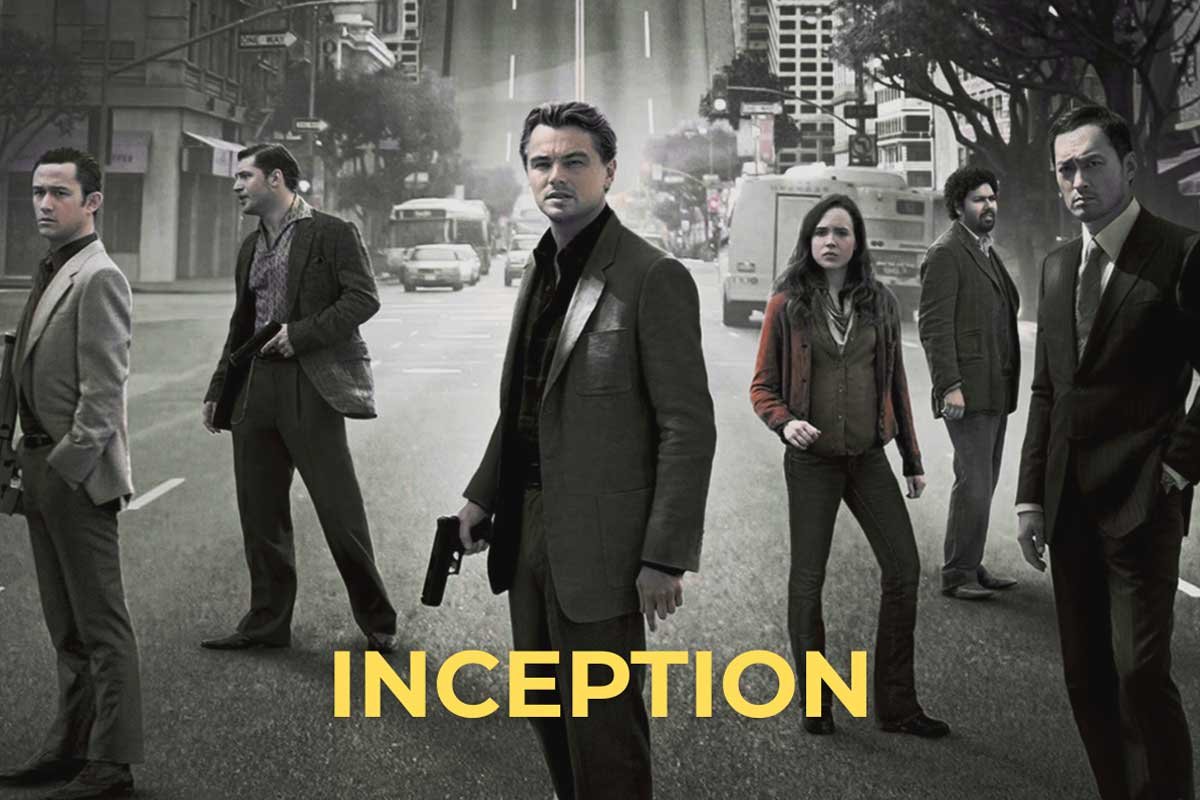
Dreams have always been a source of endless fascination for us humans. So, it’s no surprise that it’s a much-loved topic to explore in multimedia, especially in films. From Paprika, with its nightmarish dream terrorists, to Dread of Night with its surreally precognitive dreams, the global film library is filled with a number of dream-centric movies.
Yet, Christopher Nolan’s Inception (2010) still stands out among them all, with its excellent production, haunting music, and an ensemble cast. Here, we are thrown into a world where infiltrating dreams, as a real place you can touch and feel, is possible. I say infiltrate because Dom Cobb (Leonardo DiCaprio) and Arthur (Joseph Gordon-Levitt) are thieves. Instead of stealing money, though, they extract information from people’s subconscious for a living.
The Premise
The movie opens with a dream, where Cobb tries to extract secrets from a Japanese businessman, Saito (Ken Watanabe). The very next moment, Saito becomes a client and asks the duo to perform an ‘inception’, i.e., to plant an idea deep into the subconscious of Robert Fischer (Cillian Murphy), the heir to a rival business empire. The stakes are high, almost dangerous, but the reward? Something Cobb can’t deny, even in reality.
So begins his mission of assembling his band of merry men, Ariadne (Ellen Page), to build the dream; Eames (Tom Hardy), a shapeshifter of sorts; and Yusuf (Dileep Rao), to concoct potions that’ll help them stay under, to supplement his team of two.
Piecing Together the Dream Puzzle
From the very first scene, Inception throws us right in the middle of action. There’s no time to stop and explain what’s happening, especially with the way the characters weave in and out of dream and reality so quickly. However, we don’t feel the resentment of not having the entire picture. Instead, we feel the need to catch up with the story so we can keep up with the characters.
It is only later, when Ariadne joins in, that we start piecing together the mechanics of dream sharing. In a way, she works as the viewer’s proxy, asking questions we would want the answers to and voicing opinions no one else wants to say out loud. Sneakily, she lives up to the origins of her name, leading us into and out of the film’s labyrinth.
More than a Sci-Fi Action
While most of the focus is on planning and executing the heist, the film gives ample time for the plot’s facets to bloom. Action junkies can find their fix in the high-speed chases, shootouts, and coasting through an avalanche. The science nerds can enjoy the technicalities of dream sharing and the tools used to make it happen. Whereas romance lovers can find themselves shedding tears over Cobb and the cloak of guilt, love, and pain he wears because of Mal (Marion Cotillard).
Even dead, Mal’s presence is braided through the fabric of the story. She starts as a persistent nuisance hellbent on sabotaging carefully laid plans, but soon comes to occupy the fragile space between dreams, memory, and reality, evoking sympathy in our hearts. And that brings us to the emotional heart of the movie, the complexity of Cobb’s subconscious. It is through his memories of Mal (and the children) that we understand how grief and guilt have a tight grasp on him.
What Inception Gets Right
Much like the three-layered dream, the film’s blend of original worldbuilding, immersive action, and raw emotions works because of a couple of reasons. First is the visual aspect of the movie. Inception is visually stunning, sewing the surrealistic quality of the dreams into reality through Penrose stairs, folding cities, and gravity-defying corridors. Each scene dances between dreams and reality, making us wonder if the characters are in the present or still asleep.
Secondly, each actor does justice to their character, whether it’s Tom Hardy’s cocksure performance as Eames or Dileep Rao’s smart and sweet Yusuf. Each personality, so starkly different from one another, comes together to form a cohesive enough team that we can’t help but cheer on, even if they’re literal thieves.
And lastly, Hans Zimmer’s soundtrack is worthy of every bit of acclaim it has received, and some more. It shifts from dreamy to electric to melancholic at the right places, supporting the tension of the scenes rather than minimizing their effectiveness.
Climax: Stuck in Limbo
However, for all the build-up the movie takes us through, from the raining bullets to the looming threat of the limbo, the finale comes across as slightly underwhelming. It toes more into the emotional territory rather than the explosive payoff movie-goers seek. The climax does salvage itself by adding a nice little spin at the end. But it gets overshadowed by Cobb’s intense happiness that radiates even out of your screen’s pixels.
From the storyline perspective, it works, because the ultimate goal was for Cobb to reconcile with his own guilt, not see if Fischer’s subconscious is successfully tampered with. Yet, by the end, it feels like we’re actually on top of the rollercoaster, but the inevitable drop never quite arrives. Stuck in a limbo there as well, but not the movie one, thank god!
Final Thoughts
After watching it the second time, I would say Inception is still endlessly rewatchable. It falls under the category of films that stay in the back of the mind long after the ending credits have rolled up. For a second, it may even make us question our reality, but we might just never know whether our totem is somewhere out there, spinning a web of dreams over our consciousness.