Trading has undergone massive transformation over the past decade. We have seen the emergence of several new tools and instruments, some of which feel confusing at first. Synthetic indices are among these new additions and differ a big deal from traditional markets.
In this guide, we seek to break down what synthetic indices are and how they function.
What is synthetic indices trading?
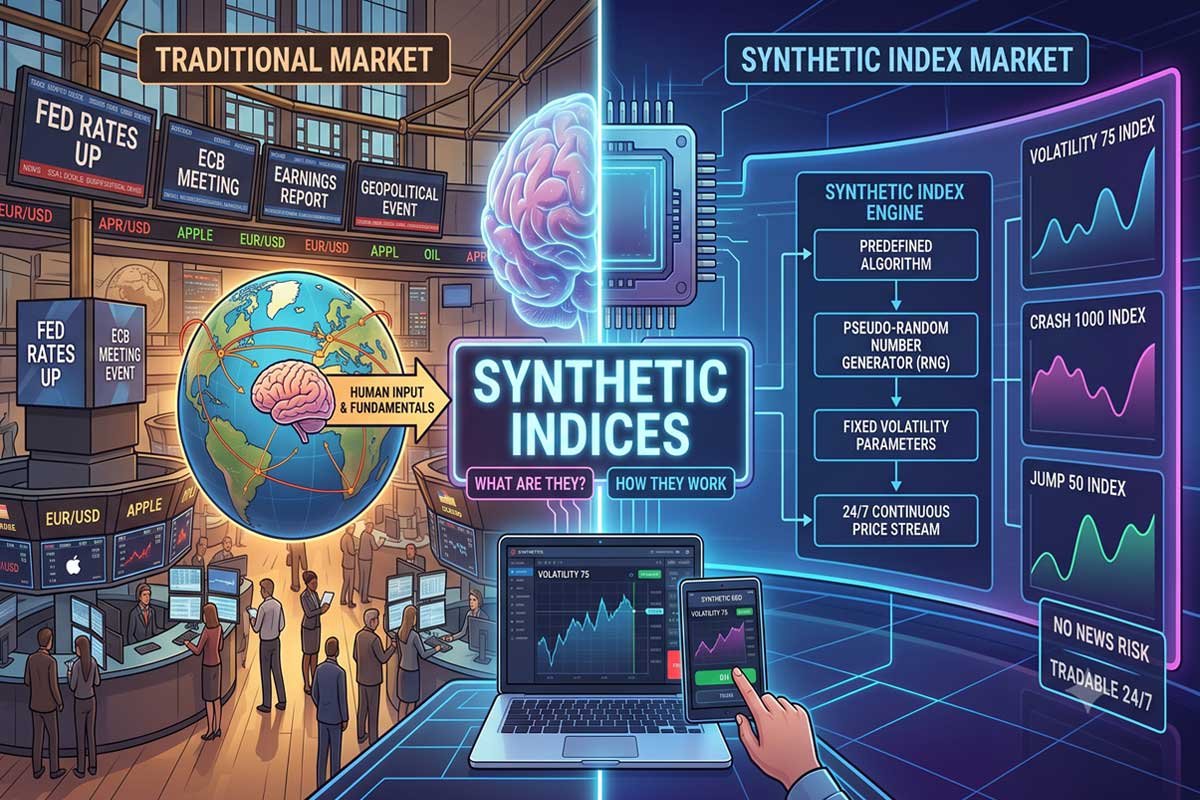
Have you been asking yourself: what is synthetic indices trading? Well, it refers to trading instruments with price movements generated by computer algorithms. These indices simulate real-world market movements but with no real assets involved. This means that there are no stocks, no bonds, or even actual company shares sitting behind them. Instead, a random number generator alone drives their price action.
You may find this sounding strange at first, given that traditional markets react to news, earnings, and economic data. This does not apply to synthetic indices; instead, they run on fixed statistical models. As a result, you get a different kind of trading experience altogether.
For many beginners, trading these instruments is very appealing. Traders don’t need to track company earnings or global events. The market shifts based on its own logic, day and night. What this implies is that trading is possible even on weekends and holidays.
How do synthetic indices work?
So, how do synthetic indices work? Having a good grasp of this concept can help you as a beginner to set realistic expectations. Each index runs on a specific algorithm with a fixed volatility level. Although there are indices that are programmed to have low volatility, there are others that show extreme swings. Traders choose an index as per their risk appetite.
The technology behind these instruments employs a cryptographically secure random number generator. This way, there are fair and unpredictable outcomes for every trade. No human trader or broker controls the movements of prices for the synthetic indices. The system runs continuously, churning out new values every second.
Every synthetic index has its own personality, so to speak. While some update every tick, others jump every second. As a trader, you should test a few indices before settling on one. This way, you can understand pattern behaviour and price rhythm.
What moves synthetic indices?
One question you may have on your mind is: what moves synthetic indices? Unlike stocks or currencies, these instruments are not driven by external news. You shouldn’t expect any central bank announcement or earnings reports to cause a sudden spike or drop in synthetic indices.
Instead, mathematical models as well as probability distributions move these indices. The algorithm sets a fixed mean and standard deviation upfront. It is from that statistical foundation that price action flows, making market behaviour consistent over long periods.
Are you a trader who dislikes unpredictable news cycles? If so, you will find this consistency appealing. It allows you to study historical patterns with no worry about sudden shocks. Factors like weather events, political shifts, or corporate scandals do not hold any weight here. It’s only one mover- the algorithm’s programmed randomness- that matters.
Understanding equity synthetic indices
Some platforms offer equity synthetic indices which mimic the behaviour of stock movements. However, these indices use synthetic pricing instead of actual equity data. As a result, they give traders equity-style exposure without touching real shares.
Equity indices often model volatility patterns like stock indices. You will notice they reflect crashes, rallies, and periods of stability. However, everything happens through simulation, not real trading activity. As a beginner, you should keep this distinction clearly in mind.
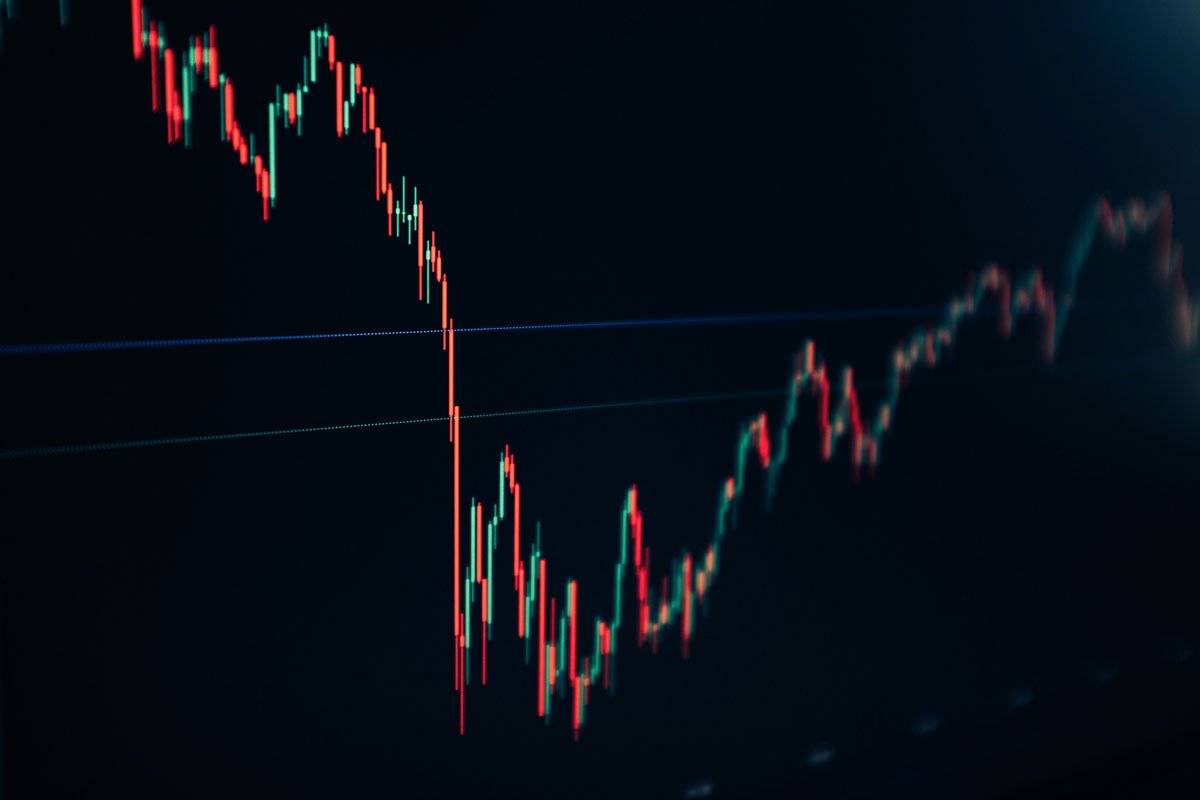
It is common for equity synthetic indices to feel familiar to stock traders. The chart patterns often look like candlestick formations from real markets. However, the price origin remains entirely artificial and model-driven. You can get more information from the various resources that exist online and cover each index type in depth.
Where can I analyse synthetic indices?
Another frequent concern you could have as a beginner is: where can I analyze synthetic indices properly? The good news is that there are several charting platforms that support these instruments already. Many brokers offering these instruments provide built-in charting tools. These tools display candlestick charts, trend lines, and technical indicators.
Traders often apply standard technical analysis methods on these platforms. Moving averages, RSI and Bollinger Bands all work perfectly fine. Because the indices run continuously, patterns can form quickly, giving traders plenty of opportunities to study price behaviour.
In addition, community forums and educational sites also cover strategy discussions. As a beginner, you can also benefit from watching live charts before trading. Besides, you can use practice accounts, especially when new to trading, to test your analysis skills safely. This can help you to build confidence before committing real capital to any strategy.
What are the benefits and risks for beginners?
You stand to enjoy several benefits when you trade synthetic indices. These include:
- 24/7 availability: These instruments trade round the clock, even on public holidays. Because of this flexibility, you can trade the indices even if you have unusual schedules or a day job.
- Fixed volatility settings: This makes the risk management somewhat easier.
- Despite the predictable structure, synthetic indices carry some risks, including:
- Leverage: While leverage can help you to boost gains, it can also exacerbate losses. When you’re a beginner, it would be best to start small and learn the mechanics first. Other than technical knowledge, you also need emotional discipline.
Before you enter any trade, it’s advisable to set clear stop-loss levels. You should also avoid chasing losses or increasing position sizes impulsively. With patience and steady practice, you can build long-term trading skills. It is common for many successful traders to spend months learning before risking serious capital.
Moreover, education remains your strongest tool as a new trader. You should read guides, watch tutorials, and join trading communities online. It’s critical to ask questions and learn from experienced traders and their shared experiences. You achieve growth through consistent effort and honest self-review.
Final thoughts
Compared to the traditional markets, synthetic indices offer a distinct trading experience. These instruments run on algorithms, rather than news or economic events. As such, they are accessible around the clock, every single day.
When you’re getting started trading synthetic indices, you should study the mechanics carefully before diving in. Other tips to help you are that you should start small, use demo accounts, and build strong habits early.
If you are looking for round-the-clock opportunities, synthetic indices are your best option. When you take time to practice and exercise patience, you can learn to navigate this market confidently.