NHTSA data for 2024 shows that 11,904 people died in crashes where at least one driver was alcohol-impaired. That works out to 30% of all traffic deaths in the country that year. Drunk driving is still a real danger for anyone on the road.
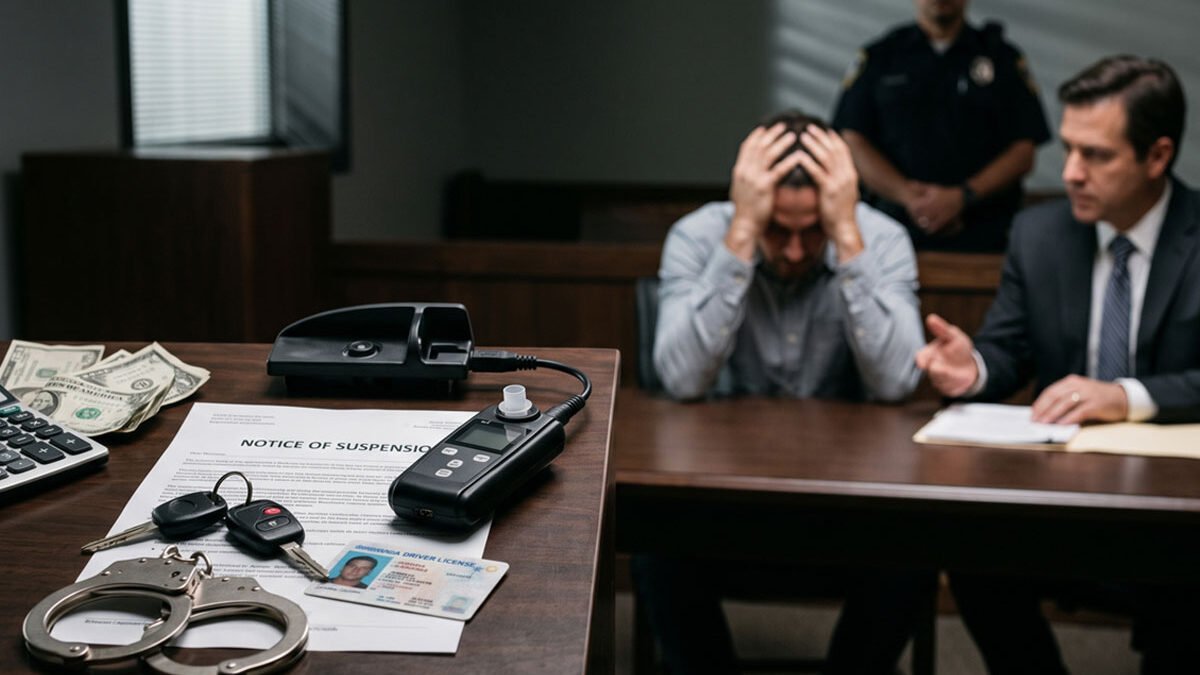
A DUI arrest can quickly become expensive. NHTSA says the bill can reach $10,000 once you add attorney fees, fines, court costs, time off work, and higher insurance rates. Some states also require ignition interlock devices.
Is jail time mandatory for a 1st DWI? It depends on the state, and Texas is used as the example below. There can be heavy legal and financial consequences for even a first offense of drunk driving with no crash or injuries. A DUI can be costly and have severe consequences, including substantial fines, jail time, suspension of the driver’s license, and community service. The convicted driver may also be ordered to attend drinking and driving classes, install an ignition interlock device in the vehicle, or receive other types of penalties.
Penalties vary widely across the states for a first offense. Penalties can change depending on the charged individual’s BAC level, driving record, and whether an aggravating factor was involved.
Here is a look at first DWI penalties and when jail time may apply, using Texas as the main example.
Mandatory means a floor, not a sentence
Texas lays out its first offense penalties clearly. According to TxDOT, first DWI penalties carry a fine of up to $2,000, jail time of 72 hours to six months, and a driver’s license suspension of up to one year. A driver may also owe a separate state fine under the Transportation Code. The Transportation Code adds $3,000 for a first conviction. A test result of 0.15 or more raises that to $6,000. Neither amount is owed until the conviction becomes final, which normally takes a jail sentence or a revoked probation.
Community supervision is available to Texas judges for a first offense. For a standard first DWI, the law does not require jail as a condition of probation, so the 72-hour minimum may never be served. The Code of Criminal Procedure requires 72 hours of continuous confinement as a probation condition only for repeat offenders.
Under the Penal Code, a first DWI carries a minimum of 72 hours of confinement. That minimum rises to six days when the driver had an open container of alcohol in immediate possession. A test result of 0.15 or more moves the offense from a Class B to a Class A misdemeanor. That class allows sanctions of up to a year in jail and a fine of up to $4,000. None of these enhancements depends on how the person drove.
The license case runs on a separate track
License suspension runs on its own track from the criminal case and can begin before any conviction.
The split is easy to see in one state. Indiana can charge a driver with OWI at a BAC of 0.08 or higher, or at any level of impairment from alcohol, drugs, or both, according to Carmel DUI lawyer. Drivers under 21 can be charged at a BAC of just 0.02. Those numbers carry weight on the license side too. According to the Indiana BMV, a driver who fails a chemical test may face a suspension of up to 180 days, and a driver who refuses may face a suspension of up to two years. Under the state’s implied consent law, a first refusal brings a one-year suspension, and a refusal with a prior OWI conviction brings two years. A court may also order an ignition interlock.
A refusal can cost more than a failed test, a point that surprises drivers who treat declining as the safer move. The suspension attaches before anyone has argued about guilt.
What actually pushes a first offense upward
Not all first offenses are judged identically. Some states allow additional charges and penalty hikes based on several different factors, including if the offender’s BAC was well above the limit, if there was a child in the vehicle, if there was an open container, if there was a crash resulting in an injury, or if the offense occurred in a school zone. Two or more of these can show up in the same case.
At trial, a jury may give a chemical test number more weight than an officer’s account of a field sobriety test. Defense work in first offense cases commonly targets the legality of the stop, the calibration of the testing device, and the officer’s observation procedure before the test. Field sobriety results and impairment itself can be challenged as well.
The sentence ends before the consequences do
A first offense often brings costs beyond the fine. After a conviction, insurers raise premiums by 44% to 88% on average, based on published estimates, and the higher rate usually sticks around for three to five years, which can add up to more than the fine itself. If a court orders an interlock, the device and its monitoring come out of the driver’s pocket too. Work can suffer as well, since some employers pass on applicants with a DUI conviction.
Quotes of the maximum penalty are far more common than reports of what first offenders actually receive. Many Texas first offenders get probation with a suspended jail sentence. The result in any one case depends on the jurisdiction, the facts of the arrest, and any prior convictions.