In 2026, the modern office is more than just a place to complete daily tasks. With the widespread adoption of hybrid working models, employees frequently mix in busy public spaces before returning to the office. This creates a higher risk for cross-contamination, particularly during the annual flu season. Consequently, poor workplace hygiene costs businesses billions of dollars annually in lost productivity and sick days. Sick leave expenses can place a significant financial burden on companies of all sizes. This makes preventative hygiene measures a critical financial strategy rather than just an administrative afterthought. As business owners look for practical ways to protect employee health, investing in targeted facility upgrades has never been more important. A proactive approach to health can transform a stagnant office into a thriving hub of collaboration.
1. Accessible Surface Sanitisation Stations
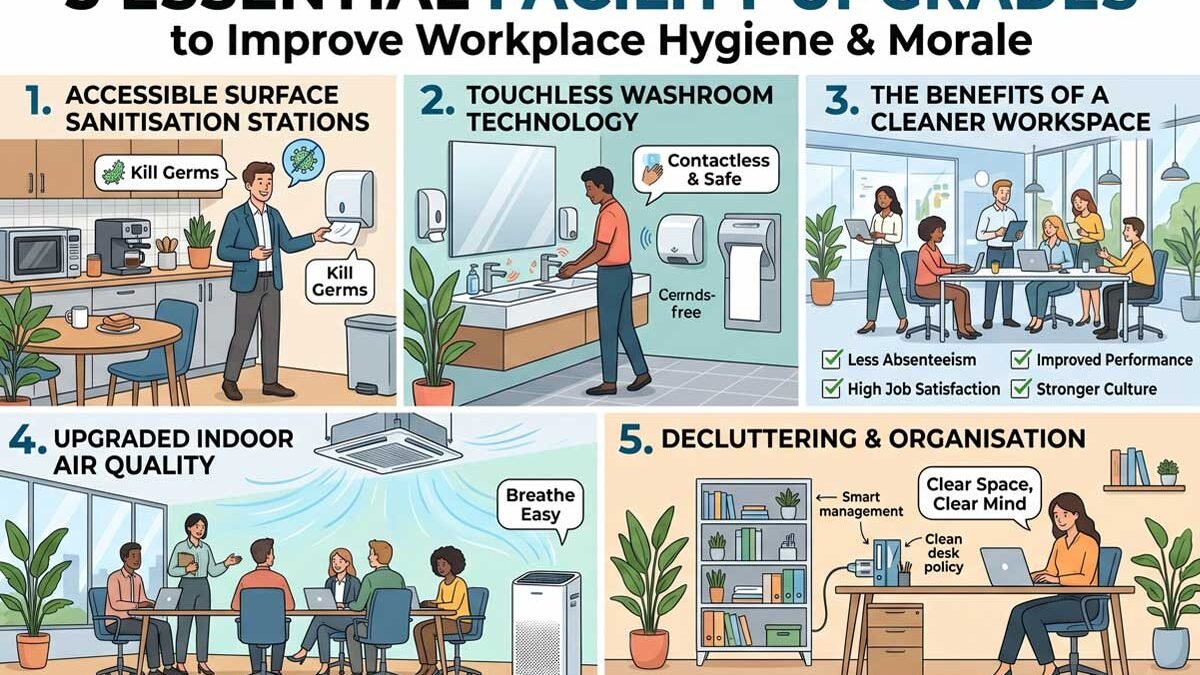
Providing a hygienic workplace is an essential responsibility for employers. High-touch communal areas, particularly kitchen benches, microwave handles, and shared meeting room desks, can become common sources of contamination in corporate environments. To combat this, facility management professionals increasingly recommend the installation of a dedicated wipe dispenser in high-traffic zones. Placing these units in break rooms and entryways encourages immediate, on-the-spot sanitisation of shared equipment, helping reduce the spread of surface germs before they can circulate through the workforce.
2. Touchless Washroom Technology
Another crucial step in modernising your facility is upgrading the washroom experience. Transitioning to touchless washroom solutions is an effective facility upgrade designed to minimise the spread of surface-level pathogens. Automatic soap dispensers, sensor taps, and automated hand dryers remove the need for physical contact in areas where bacteria can easily multiply. When employees see these modern fixtures, it reinforces the idea that their employer prioritises their health and safety on a daily basis.
3. The Tangible Benefits of a Cleaner Workspace
Upgrading your facility goes beyond basic compliance. Investing in professional facility hygiene and cleanliness can deliver significant returns through reduced absenteeism, improved employee wellbeing, and increased staff retention. Here are just a few ways enhanced hygiene directly impacts the workforce:
- Reduced Absenteeism: Implementing structured sanitisation routines and providing accessible hygiene resources can help reduce employee sick days.
- Higher Job Satisfaction: A clean work environment contributes to employee comfort and plays an important role in daily job satisfaction.
- Improved Performance: Employees working in clean, well-maintained environments can experience fewer distractions and enjoy a more comfortable, productive workspace.
- Stronger Company Culture: The cleanliness of shared office facilities reflects how much a company values its workforce and demonstrates a commitment to employee wellbeing.
4. Upgraded Indoor Air Quality Management
Modern hygiene strategies now view air care alongside surface sanitisation. Poor indoor air quality and lingering odours in neglected facilities can negatively impact cognitive function and employee confidence. Upgrading HVAC filters, introducing commercial air purifiers, and ensuring adequate ventilation are critical steps for modern businesses. Fresh, clean air helps keep employees alert and comfortable, which is especially important during long hours spent collaborating indoors.
5. Decluttering and Organisational Solutions
Finally, physical clutter plays a surprising role in both workplace hygiene and employee morale. Visual clutter and environmental disorder in a workspace can make it more difficult for employees to focus and process information efficiently. Furthermore, a cluttered office is significantly harder to clean effectively. Implementing smart storage solutions, clear desk policies, and functional cable management systems allows cleaning staff to access surfaces easily. This prevents dust and allergens from accumulating and creates a more serene, professional environment for everyone.
Maintaining a healthy office is an ongoing commitment that requires the right tools and strategies. Businesses should actively identify and control workplace hazards, including hygiene risks, by providing ready access to sanitisation tools and maintaining clean shared facilities. By upgrading your facility with modern washroom technology, improving air quality, and keeping shared spaces immaculate, you do more than just maintain a professional environment. Small improvements can generate significant long-term benefits for both team wellbeing and business performance. You create a welcoming, high-performing environment that protects your staff, boosts their daily morale, and ultimately drives the success of your business.