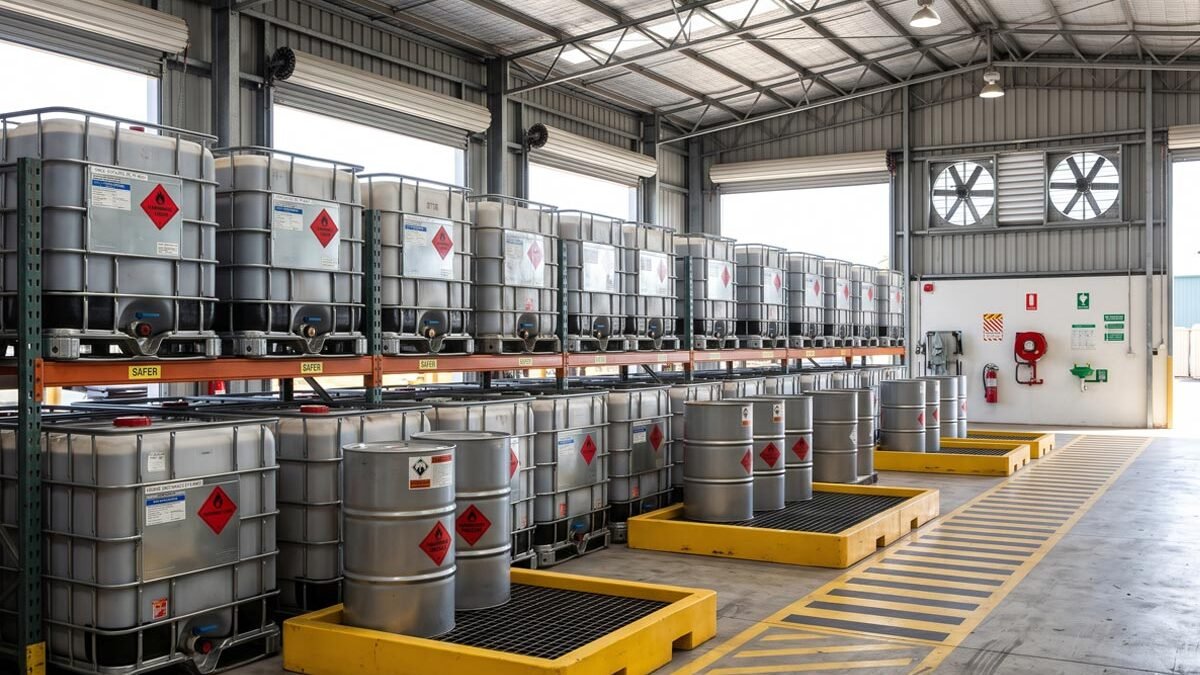
Choosing storage for flammable industrial liquids involves more than finding a container with sufficient capacity. Fuels, solvents, resins and concentrated alcohols can release vapours that create fire or explosion risks. You need storage that suits the liquid’s properties, controls potential ignition sources and meets workplace safety requirements. Several factors determine which storage arrangement is appropriate.
Match the Container Material to the Liquid
Start by reviewing the liquid’s safety data sheet (SDS), particularly its flash point, chemical compatibility and recommended storage conditions. These details help you establish whether the liquid requires specialised containment and which materials can safely withstand prolonged contact.
When comparing drums, fixed tanks and stainless steel IBC containers for industrial use, consider both material compatibility and the container’s specific approval. Stainless steel offers durability and mechanical strength, but its grade, seals and fittings must still suit the liquid. Plastic IBCs should only be considered where their design and certification are appropriate for the flammable substance involved.
Select Capacity Based on Storage Requirements
Your storage capacity should reflect the quantity of liquid required for daily operations and the risks associated with keeping larger volumes on site. Larger containers may reduce handling frequency, but they also increase the potential consequences of leaks and can trigger additional fire protection and separation requirements.
Check the liquid’s dangerous goods classification and packing group against the container’s applicable UN packaging approval, particularly when transportation is involved. In Australia, AS 1940:2017 provides guidance for storing and handling flammable and combustible liquids. Your storage arrangement must also satisfy relevant state or territory requirements.
Control Vapour Accumulation and Ignition Sources
Choose a storage location with suitable ventilation to prevent flammable vapours from reaching dangerous concentrations. Some vapours are heavier than air and may accumulate near floors, drains or enclosed spaces. Keep storage areas away from heat, sparks and activities that could introduce ignition sources.
Liquid transfers also require attention because pumping and dispensing can generate static electricity. Appropriate earthing and bonding arrangements help manage this risk, while electrical equipment must be suitable for any identified hazardous area classification. These controls are essential even when you use metal containers.
Provide Suitable Spill Containment and Separation
Your storage system should include secondary containment to prevent leaking liquids from spreading into surrounding work areas or drainage systems. Chemically compatible bunds and spill containment systems provide an additional barrier when a container, valve or connection fails.
Containment capacity must suit the stored quantities and applicable requirements. You should also separate flammable liquids from incompatible chemicals, particularly oxidising substances that could intensify a fire. Guidance on chemical storage advises against sharing bunding or drainage systems between incompatible chemicals. Depending on the risks involved, separate storage areas, physical barriers or appropriate distances can help prevent accidental mixing during a spill.
Check Handling Features and Ongoing Maintenance
Select containers that support safe filling, dispensing and movement within your facility. Suitable valves, compatible seals and secure connections can reduce the likelihood of accidental releases. Where forklifts or other machinery operate nearby, consider impact protection and the manufacturer’s approved stacking limits.
Maintenance requirements are equally important. Reusable containers need regular inspections for corrosion, structural damage and leaking fittings. You should also maintain clear chemical labels, accessible emergency equipment and documented handling procedures. These measures help ensure that your storage arrangement remains safe throughout its working life.
Make Safety the Basis of Your Storage Decision
Choosing storage for flammable industrial liquids requires you to assess the substance, container design, storage capacity and surrounding conditions together. A suitable container alone cannot eliminate fire or spill risks. By combining verified chemical compatibility with appropriate containment, ignition controls and maintenance practices, you can establish a safer and more practical storage system for your operations.