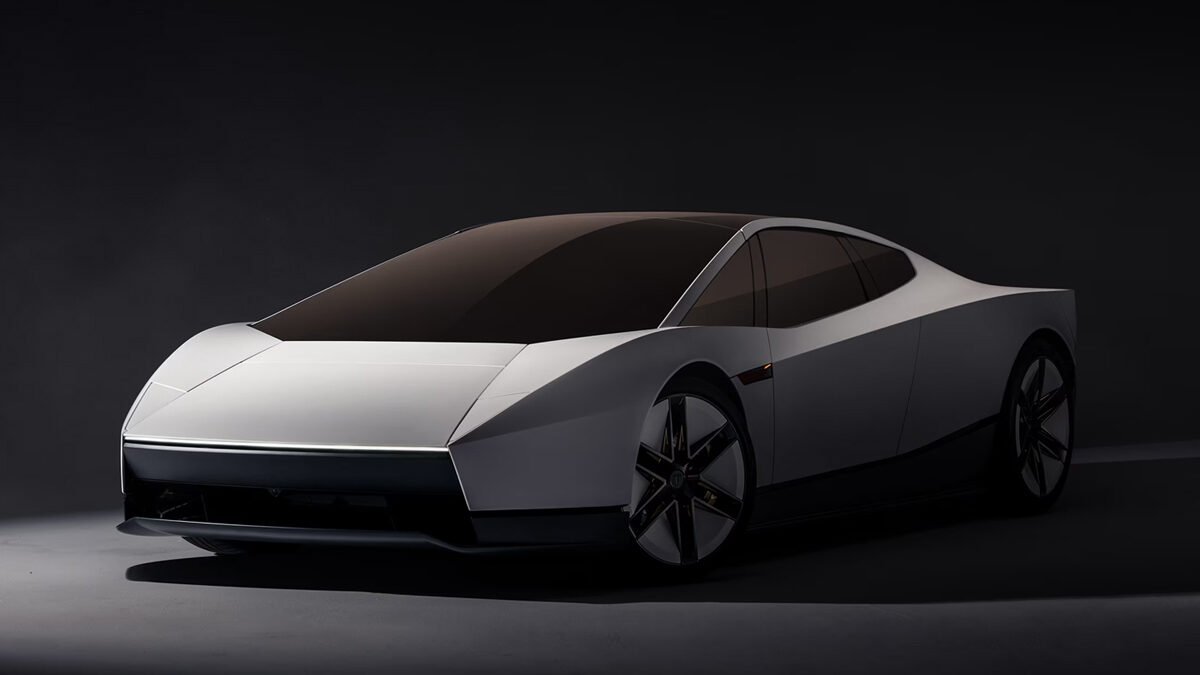
On the night of October 15, 2026, at SpaceX’s rocket-engine test site in McGregor, Texas, Tesla staged one of the most theatrical product reveals in automotive history. Under floodlights, a low, angular white coupe climbed a specially constructed curved ramp. As the surface transitioned from horizontal to vertical and then fully inverted, the car remained glued to it, wheels pointing skyward. At the apex, it released, fired a series of thrusters, launched into the air, performed controlled rotations and hops over a line-up of other Tesla vehicles (Cybercab, Cybertruck, Semi, Model Y, and Model 3), and settled back onto the pavement. Later the same evening, it accelerated from a standstill to 60 mph in a claimed 0.81 seconds. Elon Musk called the machine “the best of the last of the human-driven cars” and candidly observed that it is “not necessarily a safety-optimised car.”
The second-generation Tesla Roadster, first shown as a concept in 2017 and repeatedly delayed, has finally appeared in production-intent form. Its defining features are two complementary systems that push far beyond conventional automotive engineering: a multi-mode electric suction fan and ground-sealing package that generates massive downforce independent of speed, and a SpaceX-derived cold-gas thruster array that enables short-duration, multi-axis aerial manoeuvres. Together they allow the car to corner and accelerate in ways that appear to break the normal limits of tyre physics, and, for a few seconds at a time, to leave the ground entirely.
The Suction System: Creating Downforce at Any Speed, Including Zero
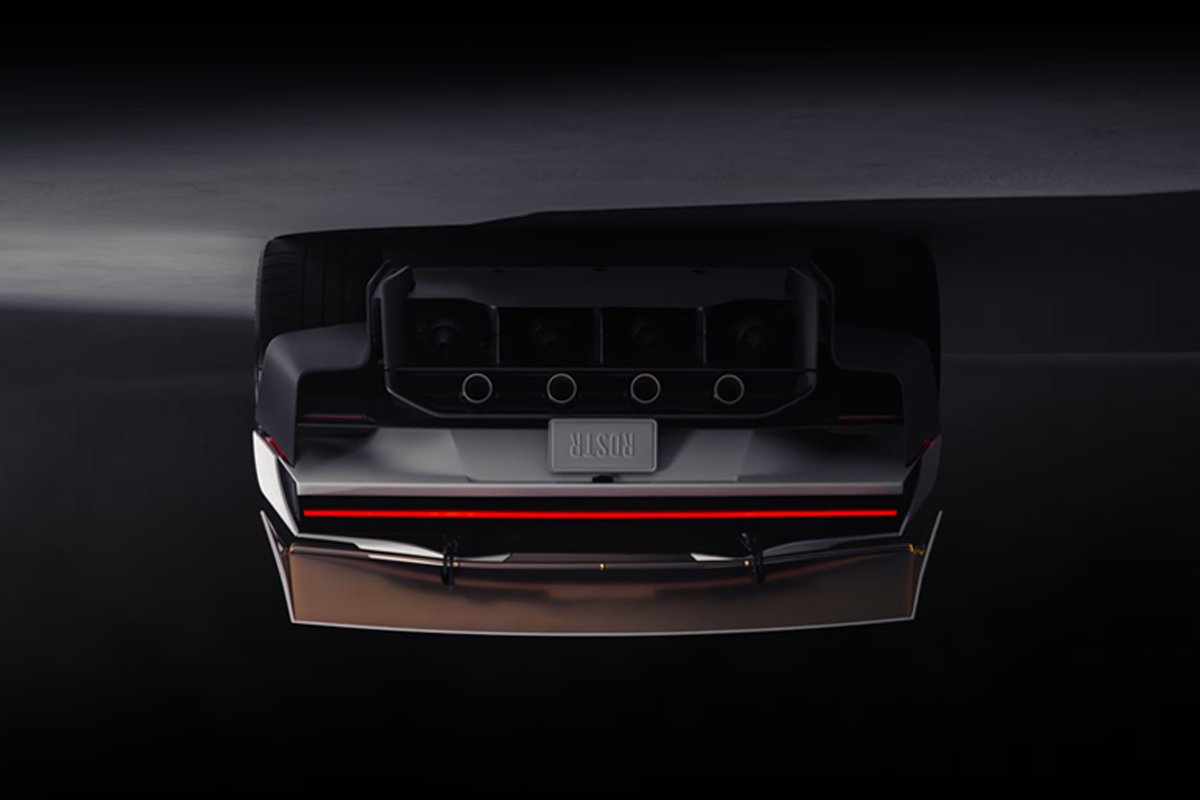
Conventional aerodynamic downforce is a function of velocity. Wings, splitters, diffusers, and underbody tunnels generate force proportional to the square of airspeed. At parking-lot speeds or a complete stop, they contribute nothing essentially. Tesla’s solution revives and modernises an idea last seen in serious competition more than four decades ago: the fan car.
Four high-capacity electric fans, each estimated at approximately 20 kW and based on the same high-voltage compressor motor family used in the car’s heat-pump thermal system (the base heat-pump motor is roughly 12 kW; the fans are tuned higher), sit in the rear diffuser region. When activated, they extract air from the volume beneath the floorpan at a high rate. At the same time, four independent flexible skirts, made of rubber with nylon bristles and engineered as replaceable wear components, deploy to seal the underbody perimeter against the surface. The rapid air removal creates a pronounced low-pressure zone under the car. Atmospheric pressure acting on the upper surfaces then presses the vehicle downward (or, when inverted, upward against the ceiling) with a force independent of forward speed.
Tesla and Vehicle Engineering Vice President Lars Moravy have stated that the system can generate up to roughly 2 g of downforce, more than twice the car’s own weight. During the McGregor demonstration, an on-screen display registered over 4,700 kg of suction force while the car was fully inverted. Because only about 1 g is required to counteract gravity when upside down, the claimed margin provides stability even under modest dynamic loads.
The system is deliberately multi-mode. In low-speed “sucker mode” (approximately 0–50 mph), the skirts remain fully sealed, and the fans prioritise maximum pressure differential. This is precisely the speed range in which conventional wings are least effective. Moravy has noted that the arrangement can sustain more than 2 g of lateral acceleration in corners where tyres alone typically deliver around 1.26 g. At higher speeds, the front and rear sealing elements partially open, converting the underbody into a high-flow venturi tunnel while the active aerodynamic surfaces, a rear wing with significant variable pitch and front elements capable of large angular deflection (up to 80 degrees in some descriptions), assume primary responsibility for downforce. In Track Mode, the suspension lowers the ride height by about 40 mm and triples stiffness, further optimising the seal and aerodynamic package. The rear wing actuators are reported to use technology related to Tesla’s Optimus robot.
The suction system is fitted to all three primary configurations (Performance, Thrust, and Rocket). Its practical value on public roads or closed circuits is the ability to maintain high tyre loading at low speeds, under hard braking, and through tight corners, conditions where pure aerodynamic cars lose grip. The trade-offs include continuous electrical demand from the battery, the need to maintain clean sealing surfaces, and eventual wear of the skirts.
The Thruster System: Cold-Gas Reaction Control for Acceleration and Flight
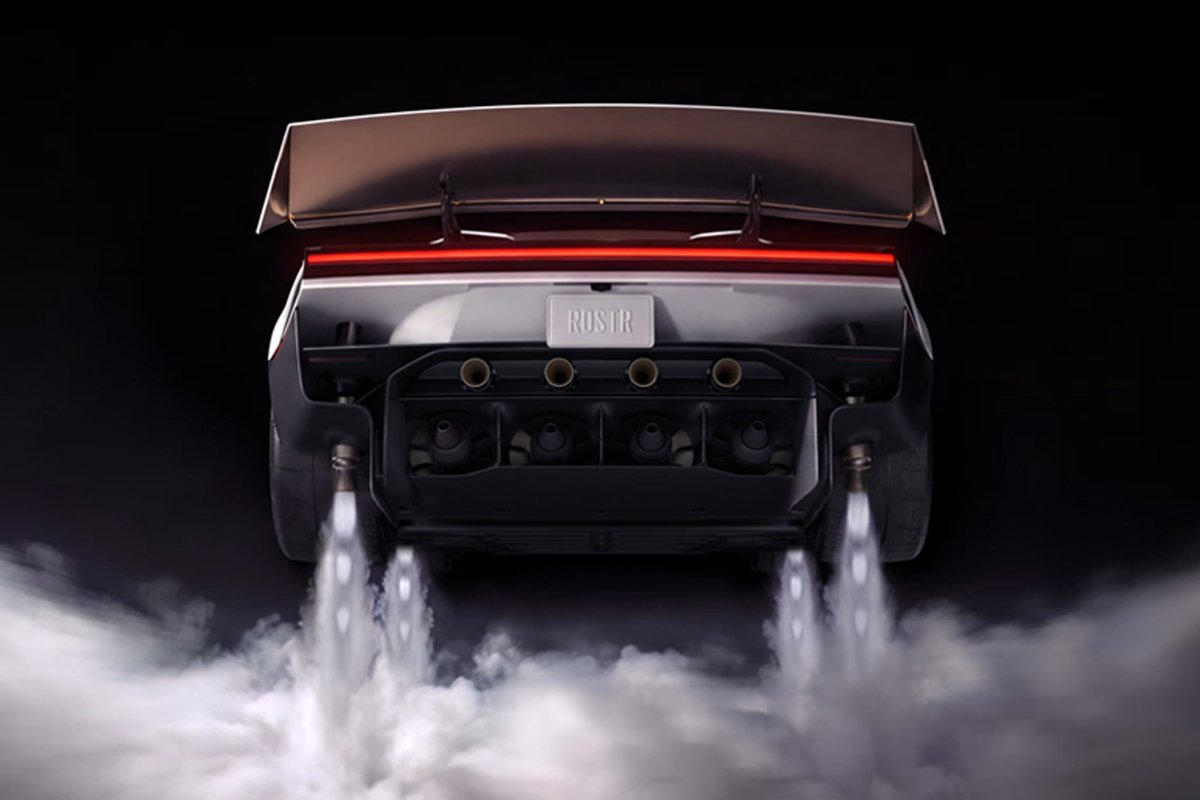
The second system turns the Tesla Roadster into a limited-duration reaction-control vehicle. It employs cold-gas thrusters, the simplest possible rocket. High-pressure gas (primarily nitrogen, though Tesla has also referred to compressed air) is stored in lightweight carbon-fibre-overwrapped pressure vessels (COPVs), the same class of tanks SpaceX uses on its launch vehicles. When a valve opens, the gas expands through a carefully contoured nozzle, accelerating to high (often supersonic) velocity. By Newton’s third law, the vehicle is pushed in the opposite direction. There is no combustion chamber, no chemical propellant, and no toxic exhaust, only stored gas that can be recharged.
Hardware is scaled according to configuration:
- Thrust (two seats, race-ready): A single approximately 200-litre COPV, rated to pressures as high as 10,000 psi, feeds four rear-mounted nozzles. These are primarily oriented for forward thrust and are claimed to deliver four to five times the force the tyres can transmit to the road. The result is acceleration that is only partially limited by available traction.
- Rocket (single seat, air-ready): A second, larger vessel is added (combined capacity around 600 litres holding roughly 250 kg of gas). Six additional thrusters are installed, typically downward-facing units near the corners or wheels for vertical lift, plus forward and lateral units for pitch, yaw, and roll control, bringing the total to ten nozzles. The passenger seat is deleted to accommodate the extra tankage and plumbing. Tesla states that every usable void in the structure is packed with these pressure vessels.
Thrust figures exceeding 80 kN have been associated with the main rear package. For a vehicle whose lightest versions are estimated in the 1,700 kg range, this is more than sufficient to overcome gravitational force for short hops. The nozzles are controlled by fast electric actuators that enable micro-adjustments in fractions of a second, allowing the vehicle’s computer to stabilise attitude, initiate rotations, and manage landing.
Flight is inherently brief. Cold-gas systems have modest specific impulse (roughly 50–70 seconds for air or nitrogen at sea level, far below chemical rockets). Sustained hover would consume the gas supply in only a few seconds. The McGregor demonstrations matched this reality: lifts, flips, and hops lasting a handful of seconds rather than continuous flight. Refilling the tanks currently requires several hours; Tesla has stated a target of roughly thirty minutes.
Integrated Operation and Demonstrated Performance
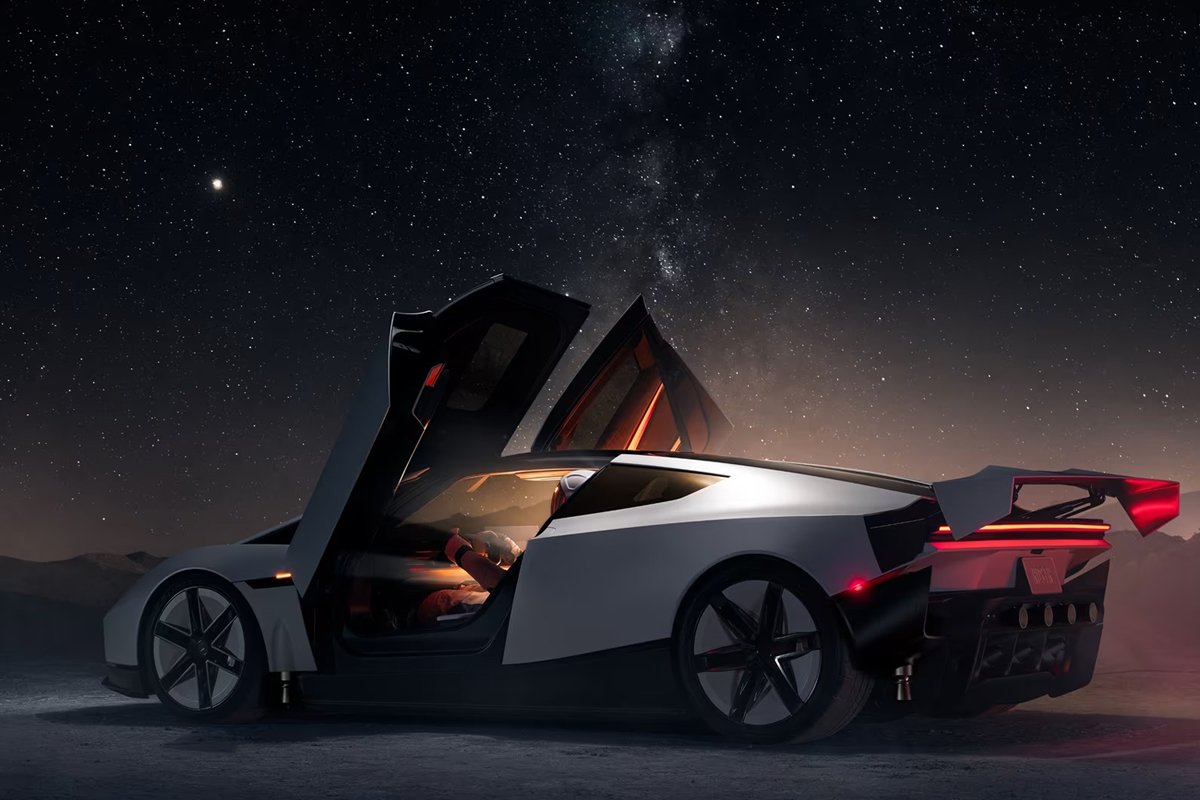
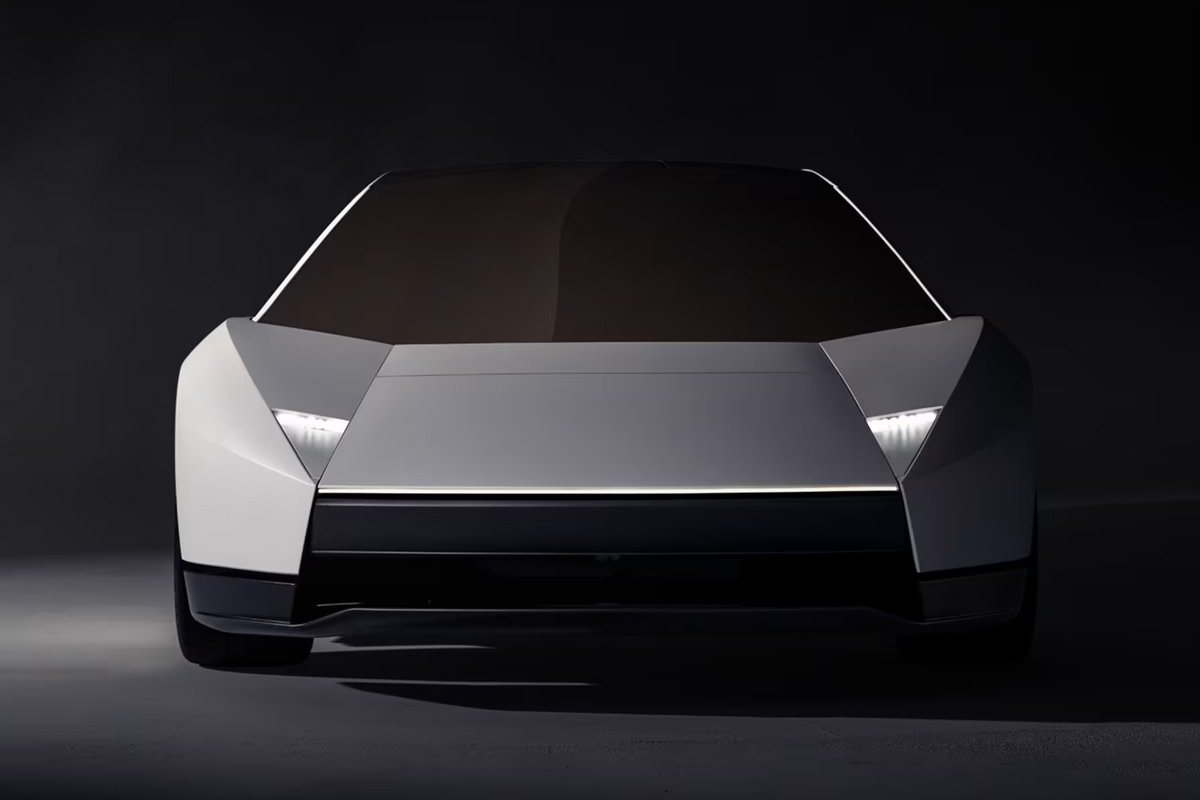
In the signature inverted-ramp sequence, the two systems operated in coordinated phases. Suction kept the car attached as it climbed past vertical and travelled inverted. At the release point, suction was reduced or eliminated, and the thrusters fired to launch the vehicle clear of the structure. Differential thrusting then produced the observed rotations and trajectory adjustments. On landing, the thrusters modulated residual velocity while the suction system could re-engage for stability.
The same rear thrusters that enable aerial work also produce the headline acceleration numbers. A live run recorded approximately 0.81 seconds to 60 mph; engineering comments have referenced even lower figures (as low as 0.55 seconds under certain measurement conventions) when suction, thrusters, and the multi-megawatt electric powertrain act together. Range is stated at more than 300 miles across configurations. Top speed targets exceed 230 mph on the upper trims, with Musk expressing longer-term ambitions toward half the speed of sound.
Powertrain details shared by Tesla engineers indicate rear-wheel drive with two motors capable of torque vectoring, an 800–1,000-volt architecture, and peak outputs in the region of 1 MW (approximately 1,340 hp) or higher on performance variants. The battery uses advanced 4680-format cells optimised for high sustained power and supports charging rates up to 500 kW.
Historical Context, Practical Limits, and Outlook
The original November 2017 Tesla Roadster concept promised 620 miles of range, four seats in a 2+2 layout, a base price near $200,000, and production in 2020. The 2026 reality is a two-seat (or single-seat) car with roughly half the range, far more extreme performance hardware, and a production window now targeted for 2028. No final retail price has been published. Reservations require deposits of $50,000 for the Performance version and substantially more for Thrust.
Both core technologies have precedents. Fan cars appeared in Can-Am and Formula 1 in the 1970s before being restricted by regulations. Cold-gas thrusters have long been used for spacecraft attitude control and, in scaled form, by SpaceX for booster reorientation. What is novel is their simultaneous integration into a road-capable chassis with modern electric power, active control, and lightweight composite pressure vessels.
Significant limitations remain. The full Rocket configuration is explicitly not approved for public-road use in many jurisdictions. Even the suction system introduces complexity, parasitic energy consumption, and maintenance requirements. Regulatory approval for thruster-equipped vehicles on public roads is uncertain and likely to be highly restricted. The aerial capabilities, while spectacular, are short-duration demonstrations rather than practical transportation.
Tesla presents the Roadster as a halo vehicle, a rolling laboratory that demonstrates the outer limits of what is possible when electric propulsion, active aerodynamics, and aerospace reaction control converge. Whether production examples deliver the claimed track-record-crushing performance, and whether any customer ever experiences the full aerial package outside a controlled environment, will only be answered after 2028. For the moment, the McGregor event has permanently expanded the public imagination of what a car can do.