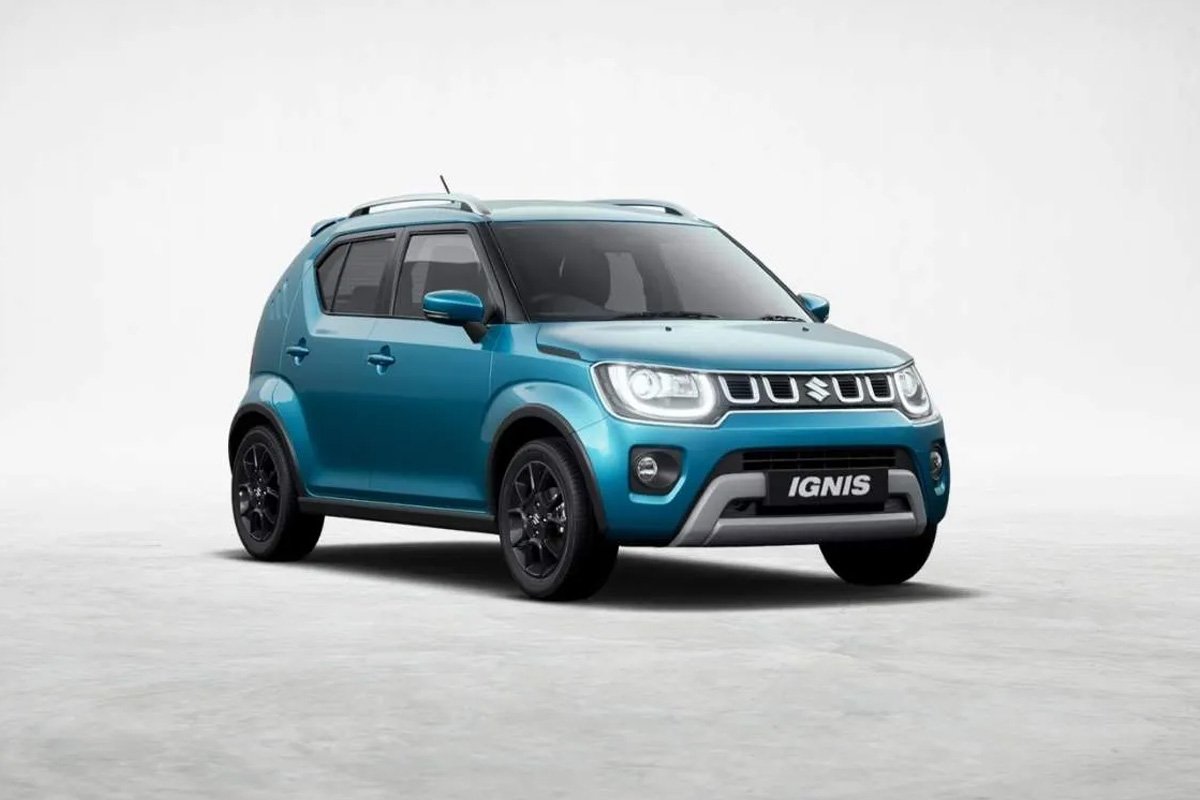
The Maruti Suzuki Ignis has officially wound down production and been discontinued, quietly bringing the curtains down on its nine-year run in India. Dealerships have stopped taking fresh bookings, and only a tiny fraction of leftover stock remains at select Nexa outlets.
When it debuted back in January 2017, the Ignis was pitched as a quirky, unconventional “urban compact SUV” targeted directly at millennials. However, the Indian automotive landscape evolved drastically over the next decade, ultimately leaving the eccentric hatchback behind.
Why the Maruti Suzuki Ignis Was Discontinued: The Deep Dive
The discontinuation of the Ignis wasn’t a sudden knee-jerk reaction; it was the logical conclusion of changing market dynamics, shifting consumer preferences, and internal portfolio restructuring.
1. The Rise of the True “Micro-SUV” (The Punch & Exter Effect)
When the Ignis arrived, the concept of a sub-compact micro-SUV was still in its infancy. The Ignis attempted to straddle the line between a tall-boy hatchback and a crossover.
However, the game completely changed with the arrival of heavyweights like the Tata Punch and later the Hyundai Exter. These vehicles offered:
- More muscular, conventional SUV styling.
- Higher ground clearance.
- A more commanding driving position.
Faced with proper micro-SUVs, Indian buyers quickly moved away from the “quirky crossover” aesthetic of the Ignis, rendering its unique design language less appealing.
2. Product Stagnation and Lack of Updates
In the fast-paced automotive sector, continuous updates are the lifeblood of a vehicle’s longevity. Maruti Suzuki essentially left the Ignis on autopilot. Over its nine years on the market, the Ignis received:
- A minor safety revision in 2019.
- Exactly one major mid-lifecycle facelift in 2020.
While siblings like the Swift, Dzire, and Baleno received generation changes, completely new platforms, and modern engine architectures, the Ignis was left out. It continued using older platform elements and the legacy K12M engine, making it feel increasingly dated next to its modern showroom counterparts.
3. The Missing Factory-Fitted CNG Option
For a budget-to-mid-range vehicle in India, fuel options are a massive selling point. Maruti Suzuki successfully rolled out its S-CNG technology across nearly its entire Arena and Nexa lineups to cater to efficiency-conscious buyers.
Strangely, the Ignis never received a factory-fitted CNG variant. In a price-sensitive segment where low running costs are paramount, fighting without a CNG option severely hampered the Ignis against both internal and external rivals.
4. Severe Internal Cannibalisation
Selling the Ignis through the premium Nexa network proved to be a double-edged sword. While it gave the car a premium positioning, it forced it to share floor space with massive volume drivers like the Baleno and the Fronx.
For every single Ignis sold in its final years, Nexa dealers were pushing out roughly 10 to 15 units of the Baleno or Fronx. Buyers walking into Nexa showrooms willingly paid a little extra to step up to the larger, more feature-rich Baleno or the more modern, SUV-styled Fronx.
The Numbers Speak: A Downward Sales Trajectory
The sales trajectory highlights why Maruti Suzuki decided to optimise its production lines for high-demand models instead of keeping the Ignis on life support.
| Year | Annual Performance / Sales Milestone |
| 2017 | Strong debut with 48,425 units sold. |
| 2019 | Initial hype faded; dropped to just 22,140 units. |
| 2022 | Peaked post-facelift at 51,176 units (its best year). |
| 2024 | Slid down to 26,860 units. |
| Early 2026 | Dwindled to under 2,000 units per month, prompting the production halt. |
What Lies Ahead: Project Y43
Maruti Suzuki isn’t leaving this market segment empty-handed. The production capacity freed up by the exit of the Ignis is being reallocated to pave the way for its spiritual successor.
Maruti is aggressively developing a brand-new sub-compact micro-SUV, internally codenamed Project Y43.
- The Goal: To directly take on the Tata Punch and Hyundai Exter.
- The Strategy: Moving away from quirky styling in favour of proper SUV proportions, upright stances, robust standard safety features (including 6 airbags), and the latest Z-Series petrol engines with mild-hybrid options.
Final Verdict
The Ignis was an incredibly fun, practical car with a cult following, boasting excellent visibility, a peppy 4-cylinder engine, and effortless city drivability. However, as safety norms tightened and India’s obsession with bold, upright SUVs grew, the quirky “Urban Crossover” simply ran out of road.